What is Batching Concrete Benefits and Best Practices?
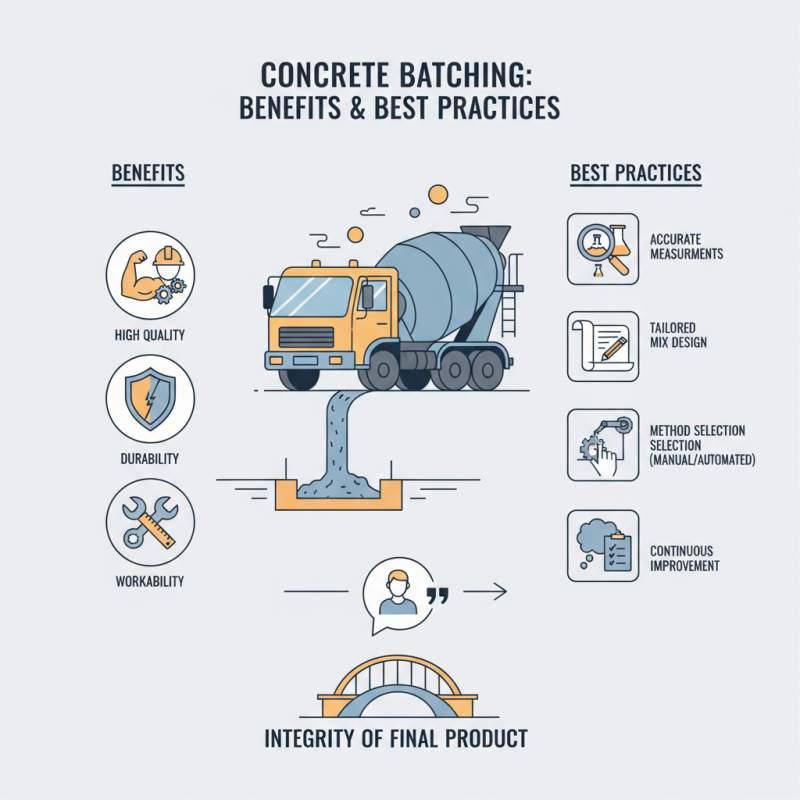
In the construction industry, Batching Concrete is a vital process. Experts highlight its significance in achieving high quality and durable structures. John Smith, a concrete technology specialist, states, "Precision in batching ensures the integrity of the final product." His insight underscores the importance of accurate measurements in concrete production.
Effective Batching Concrete involves more than just mixing materials. It requires understanding the properties of each component. The mix design must be tailored to specific project needs. This precision impacts the strength, durability, and workability of concrete. However, many contractors overlook these details, leading to potential issues in the construction phase. Reflecting on past projects can reveal missed opportunities for improvement.
Choosing the right batching method is crucial. Whether it’s manual or automated, each approach has its advantages and challenges. The industry is evolving, with technology offering new solutions. Yet, professionals must remain vigilant about the basics. Overall, mastering Batching Concrete is essential for success in any construction endeavor.
Understanding Batching Concrete: Definition and Importance
Batching concrete is a crucial process in construction. This method involves measuring and combining various ingredients, such as cement, water, and aggregates. The main goal is to achieve consistency and ensure the desired strength and durability of the final product. Inaccurate batching can lead to structural failures, which makes understanding its importance paramount.
Proper batching ensures that each batch of concrete meets specified requirements. It minimizes waste and optimizes resources. Accuracy is key; even slight deviations in ingredient proportions can yield different results. Monitoring water-cement ratios closely is essential to avoid issues like cracking or incomplete curing. Many sites struggle with this aspect, leading to costly rework and project delays.
Batching requires skilled personnel who understand material properties. Experienced workers are vital, as they can detect issues before they escalate. Using digital tools can aid in precise measurements, yet human oversight remains irreplaceable. Overall, while batching is a straightforward concept, its execution demands attention to detail and continuous improvement for best results.
What is Batching Concrete Benefits and Best Practices?
| Dimension | Description | Benefits | Best Practices |
| Accuracy | Ensures precise measurement of materials. | Reduces waste and increases quality consistency. | Use calibrated equipment for all measurements. |
| Time Efficiency | Speeds up the concrete mixing process. | Shorter project timelines. | Plan batches according to project schedule. |
| Consistency | Delivers uniform concrete mixture. | Improves structural reliability. | Regularly check mix design and adjust as needed. |
| Cost-Effectiveness | Minimizes material waste and overuse. | Lower overall project costs. | Optimize batch sizes according to project needs. |
| Environment Impact | Reduces carbon footprint through efficient batching. | Supports sustainable construction practices. | Incorporate recycled materials when possible. |
Types of Concrete Batching: Centralized vs. Decentralized Methods
Concrete batching plays a crucial role in construction projects. Two primary methods are centralized and decentralized batching. Centralized methods involve producing concrete at a single plant and then delivering it to job sites. This approach enhances quality control and consistency. The National Ready Mixed Concrete Association (NRMCA) reports that centralized batching can reduce material waste by up to 20%. It’s efficient for large projects but may incur higher transportation costs.
On the other hand, decentralized batching occurs closer to the job site. This method minimizes transport time and costs, making it ideal for small projects. However, it poses challenges in maintaining uniform quality. A study by the American Society of Civil Engineers indicates that decentralized batching can lead to a 15% variability in concrete strength. This inconsistency may require additional testing and adjustments, affecting project timelines.
Both methods have their pros and cons. The choice between centralized and decentralized batching depends on project size, location, and budget. Understanding these dynamics is essential for construction professionals aiming for successful project outcomes.
Benefits of Batching Concrete: Cost Efficiency and Quality Control
Batching concrete plays a crucial role in the construction industry. Cost efficiency is one of its standout benefits. According to a report from the American Concrete Institute, precision in batching can reduce material waste by up to 15%. This translates to significant savings on large projects. Efficient batching also ensures that each batch meets the required specifications, which is essential for overall project quality.
Quality control is another vital aspect of batching concrete. By ensuring uniformity in mix proportions, contractors minimize variations in strength and durability. The National Ready Mixed Concrete Association highlights that proper batching contributes to a consistent product, enhancing the structural integrity of buildings. Inconsistent mixes can lead to costly repairs down the line. Fluctuations in water content and aggregates can compromise the final outcome.
Despite these advantages, some challenges exist. Not all Batching Plants adhere to the same standards, causing discrepancies. Additionally, reliance on technology can be a double-edged sword. It requires skilled operators to manage effectively. Poor operator training can lead to mistakes. Striking a balance between automation and hands-on experience is key in achieving optimal results in concrete batching.
Best Practices for Batching Concrete: Ratios, Timing, and Equipment
Batching concrete is a critical step in construction. Proper ratios are essential. The most common mix is 1:2:3, which includes one part cement, two parts sand, and three parts aggregates. This ratio ensures a balanced mixture. However, factors like climate and project-specific requirements can alter these numbers. It's vital to adjust for local materials and conditions.
Timing is another factor that cannot be overlooked. Mixing should be done in a timely manner to ensure the concrete reaches its optimal strength. In hot weather, for example, fast setting can occur. Adjust the water content to manage this effect. Equipment quality also plays a role in the batching process. A reliable mixer can ensure uniformity, but be aware of maintenance needs. Sometimes, worn-out equipment can lead to inconsistent batches, affecting the overall quality.
Using digital tools for batching can enhance precision. However, they also require training and practice. Some workers might struggle with technology, causing delays. Regular training can bridge this gap. On-site supervision helps catch these mistakes early. Reflection on past batches can lead to improvements, ensuring better results in future projects.
Concrete Batching: Benefits and Best Practices
This bar chart illustrates the impact of various factors on the quality of concrete during batching. Ensuring the right ratios, timing accuracy, and high-quality equipment can significantly enhance the final product.
Industry Standards and Regulations for Concrete Batching Practices
Concrete batching is a critical process in construction. Adhering to industry standards ensures quality and safety. These regulations often vary by region but generally include guidelines on material quality, mixing ratios, and environmental protection.
Most industry standards stress the importance of accuracy. Each component of the concrete mix must be measured carefully. Small deviations can lead to structural weaknesses. Additionally, maintaining proper equipment hygiene is vital. Dirty machinery can contaminate the mix, affecting performance.
It's important to regularly assess batching practices. Companies should conduct audits to evaluate compliance. Reflecting on practices helps in identifying weaknesses. Striving for improvement is necessary for all involved. Engaging with trained professionals can enhance knowledge of current regulations and best practices, fostering a safer work environment.