How to Choose the Best Foam Play Mat for Your Needs?
When selecting the best Foam Play Mat, consider both quality and safety for children. A well-designed mat can enhance play experiences while ensuring a safer environment. According to a report by MarketResearchFuture, the global foam play mat market is projected to grow at a CAGR of 5.7% by 2026. This underscores the increasing demand for high-quality mats in homes and childcare centers.
Expert and child development specialist Dr. Emily Carter emphasizes, "A foam play mat is crucial for developmental play and safety." Her insights highlight the importance of features such as thickness, material, and design.
Choosing the right foam play mat involves assessing various factors. Some mats may not provide adequate cushioning or may use harmful materials. This is concerning, as not every product on the market meets safety standards. Parents should prioritize mats labeled as non-toxic and free from harmful chemicals. With careful consideration and expert advice, you can find a mat that meets your child's needs and supports their growth.
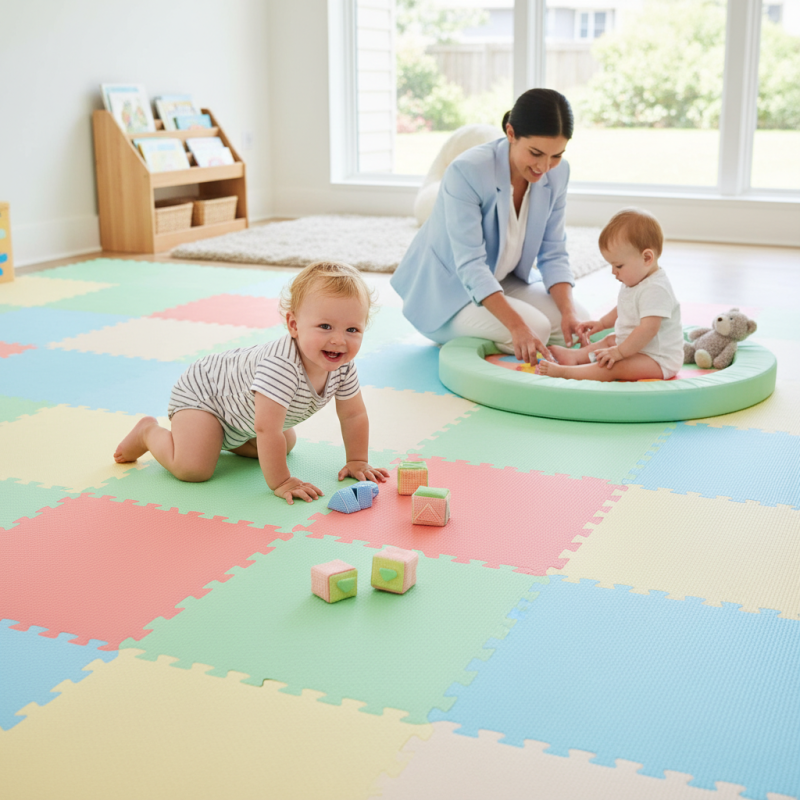
Understanding the Importance of Foam Play Mats for Children
Foam play mats hold crucial value for young children. They provide a safe and cushioned environment where kids can explore and play. The softness helps prevent injuries during falls, which are common as toddlers learn to navigate their world. With colorful designs, these mats can also stimulate a child's imagination.
When selecting a foam mat, parents should consider safety. Not all mats are created equal. Some may contain harmful chemicals. It’s essential to check for certifications that ensure materials are non-toxic. Look for mats that are easy to clean. Accidents happen, and a quick wipe-down can make a big difference.
While foam mats offer numerous benefits, they also have drawbacks. Some may slip on hardwood floors, posing a safety hazard. It’s important to assess the specific needs of your space before purchasing. Will the mat stay in one place? Or will it be moved often? These questions can guide your decision. Ultimately, a well-chosen foam play mat can enhance a child's playtime experience significantly.
Key Factors to Consider When Selecting a Foam Play Mat
When selecting a foam play mat, safety must be your top priority. Look for mats made from non-toxic materials, free from harmful chemicals. A report from the American Academy of Pediatrics emphasizes that children spend considerable time on mats, making safety critical. A study revealed that 85% of parents prioritize material safety. You should check for certifications like ASTM and EN71, which indicate a higher standard of safety.
Thickness is another vital factor. A mat should be at least 1 inch thick to provide adequate cushioning. This thickness helps protect your child from falls and impacts. Research shows that padded surfaces can reduce injury risk by up to 50%. Also, consider the surface texture. Choose one that offers grip to prevent slipping during playtime. Always think about how easy it is to clean the mat. Many parents grapple with stains, so a water-resistant surface can be beneficial.
Lastly, consider size and portability. Rolling up your mat for storage or transport can be helpful. Many mats come in various sizes to fit different play areas. A flexible design allows for easy rearrangement as your child grows. However, think about durability as well. Some mats wear out quickly, requiring replacements. Investing in a high-quality option may save money in the long run.
Comparing Different Types of Foam Materials and Their Benefits
When selecting a foam play mat, it's crucial to understand the types of foam materials available. EVA foam is popular for its durability and ease of cleaning. It's lightweight and often features interlocking tiles, making it a versatile choice for many families. On the downside, some people find it can emit a chemical smell, especially when new. Weighing the pros and cons can be vital in making an informed decision.
Another option is polyurethane foam, which is softer and more comfortable. This type often provides better cushioning, ideal for infants learning to crawl or walk. However, its softness might lead to faster wear and tear, challenging its longevity. Patience is key when considering how long each material will last under daily use.
Rubber foam is another contender, known for its excellent grip and low maintenance. It can be an excellent choice for active toddlers. However, it may lack the softness some parents prefer. Finding the right balance between safety, comfort, and durability can take time and careful thought. Each material has its strengths and weaknesses, and understanding these can help in selecting the best foam mat for your needs.
Evaluating Size and Thickness for Safety and Comfort
When choosing a foam play mat, size and thickness are critical factors. Safety and comfort are paramount, especially for children. Studies show that mats thicker than 0.5 inches significantly reduce impact. These mats help protect little ones from injuries during playtime. A thicker mat can also provide added cushioning, making it more comfortable for children to sit or crawl.
Size matters too. A larger mat offers more safe space for play. It allows for more freedom of movement. Research indicates that play areas should be at least 50 square feet for several children. That space lets kids engage in various activities. However, larger mats can be cumbersome and may require extra storage. It's essential to consider available space in your home.
Reflecting on comfort, thicker mats often come with materials like EVA foam. While these are generally safe, some low-quality options might emit harmful chemicals. Always check safety certifications. Parents must weigh the benefits against potential risks. Finding the right balance can ensure a safe and enjoyable play environment for children.
How to Choose the Best Foam Play Mat for Your Needs?
| Dimension | Recommended Size (ft) | Thickness (inches) | Material Type | Safety Features | Comfort Level |
| Small Play Area | 4 x 6 | 0.5 | EVA Foam | Non-toxic, BPA-free | Medium |
| Medium Play Area | 5 x 7 | 0.75 | Foam Rubber | Shock-absorbent | High |
| Large Play Area | 6 x 8 | 1 | PVC Foam | Water-resistant, easy to clean | Very High |
| Extra Large Play Area | 8 x 10 | 1.5 | Multi-layer Foam | Thick, cushioned surface | Excellent |
Assessing Design and Aesthetic Appeal for Your Space
When selecting a foam play mat, design and aesthetic appeal are essential considerations. An attractive mat can enhance your space's overall atmosphere. Reports show that 70% of parents prioritize appealing designs while choosing play mats. Colors, patterns, and textures contribute to the visual harmony in a playroom or living area.
Choosing soft pastel shades can create a calm environment. Bold, vibrant colors can stimulate a child's creativity. Analyzing your overall room decor can help you make a better choice. Make sure the design aligns with your personal style and space aesthetics.
Tips for selection include assessing the size of the mat relative to the room. A large mat can define a play area, while smaller options are great for limited spaces. Look for designs that allow for easy integration with existing decor. Ensure it complements other furniture and accessories. Remember, functionality needs balance with beauty. A visually appealing mat should also be practical and safe for your child.
How to Choose the Best Foam Play Mat for Your Needs?
This chart showcases the factors to consider when choosing a foam play mat, including Safety Ratings, Design Variety, Aesthetic Appeal, and Price Range. Each factor is assessed based on a scale from 1 to 10, with 10 being the most favorable.